
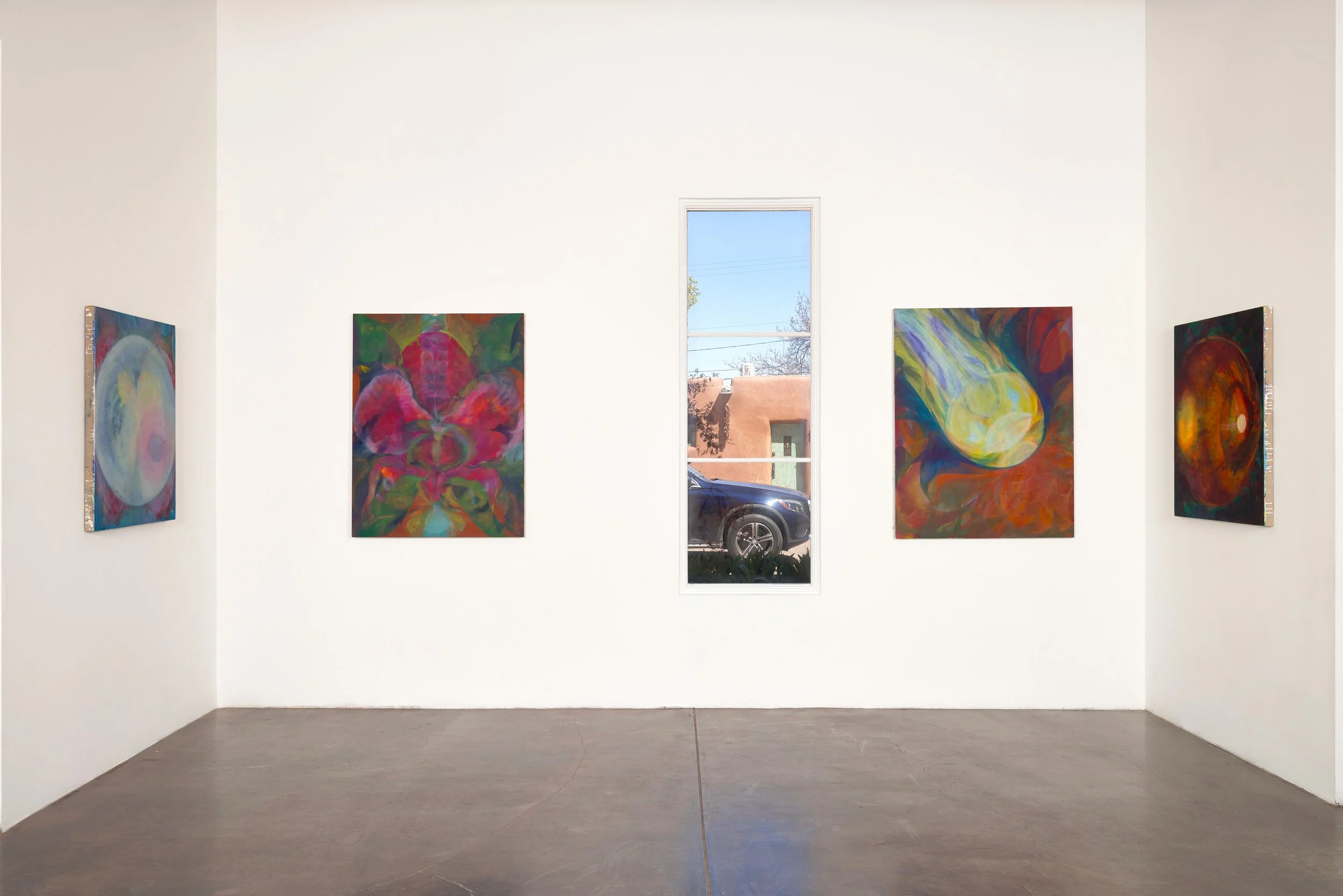
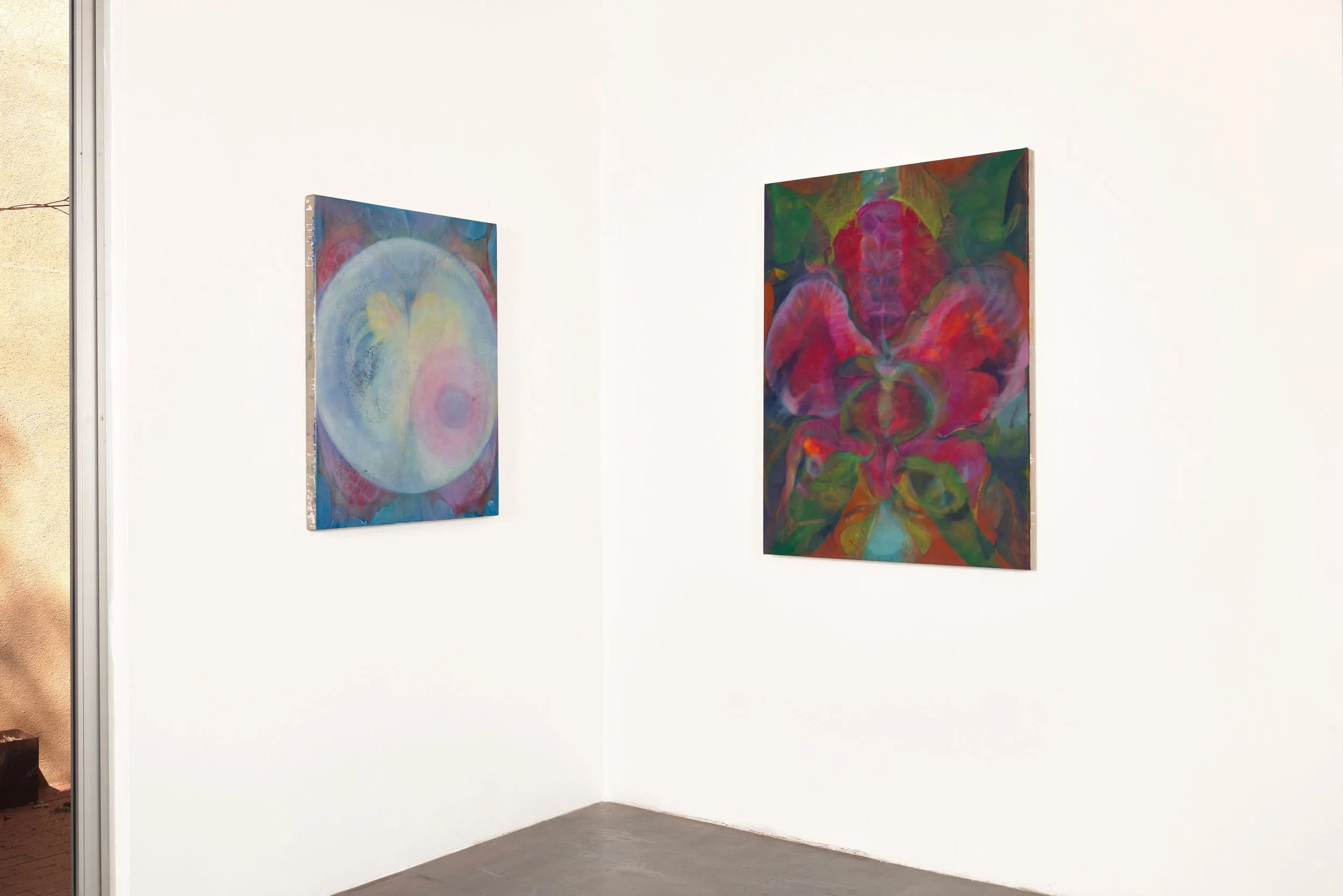
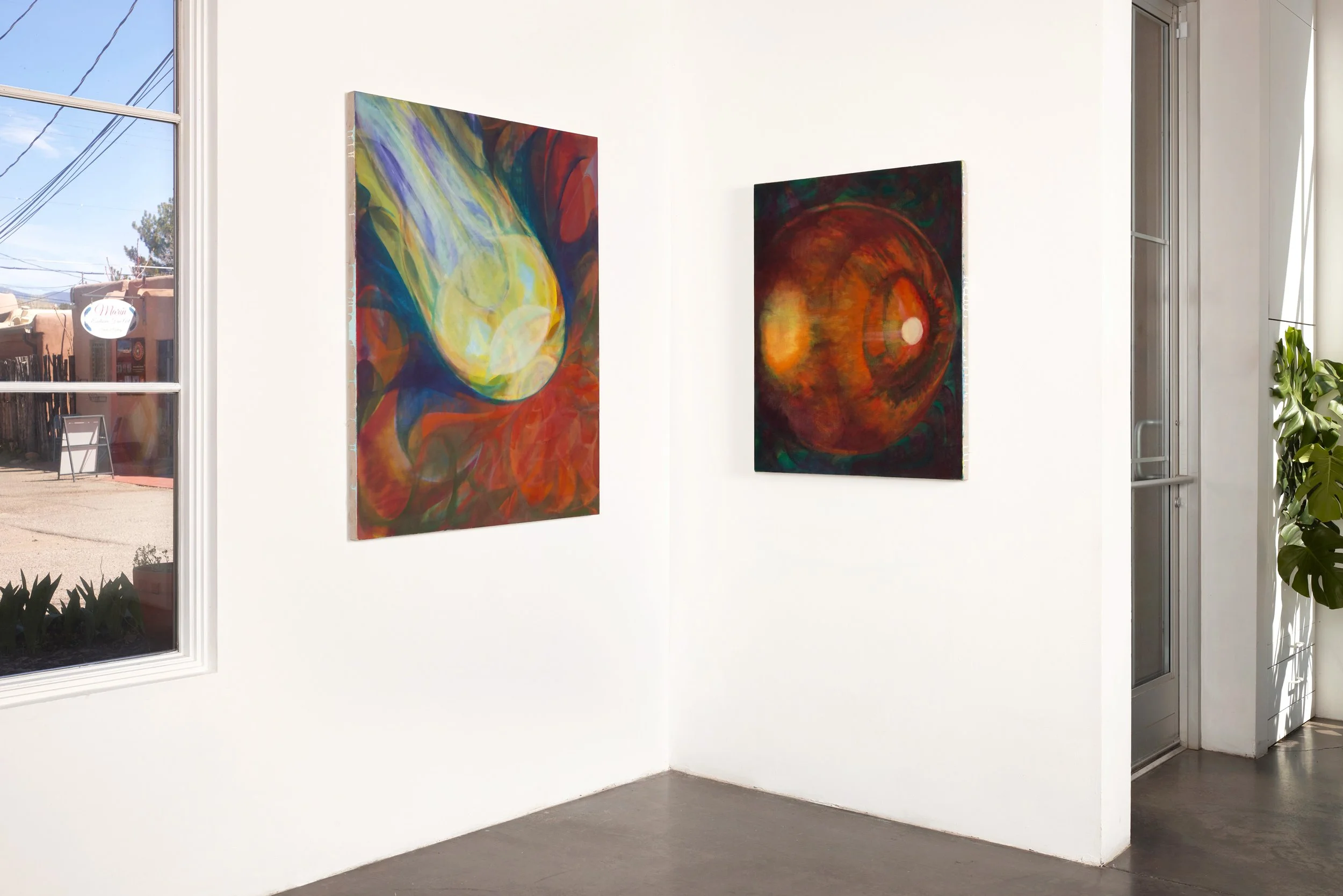
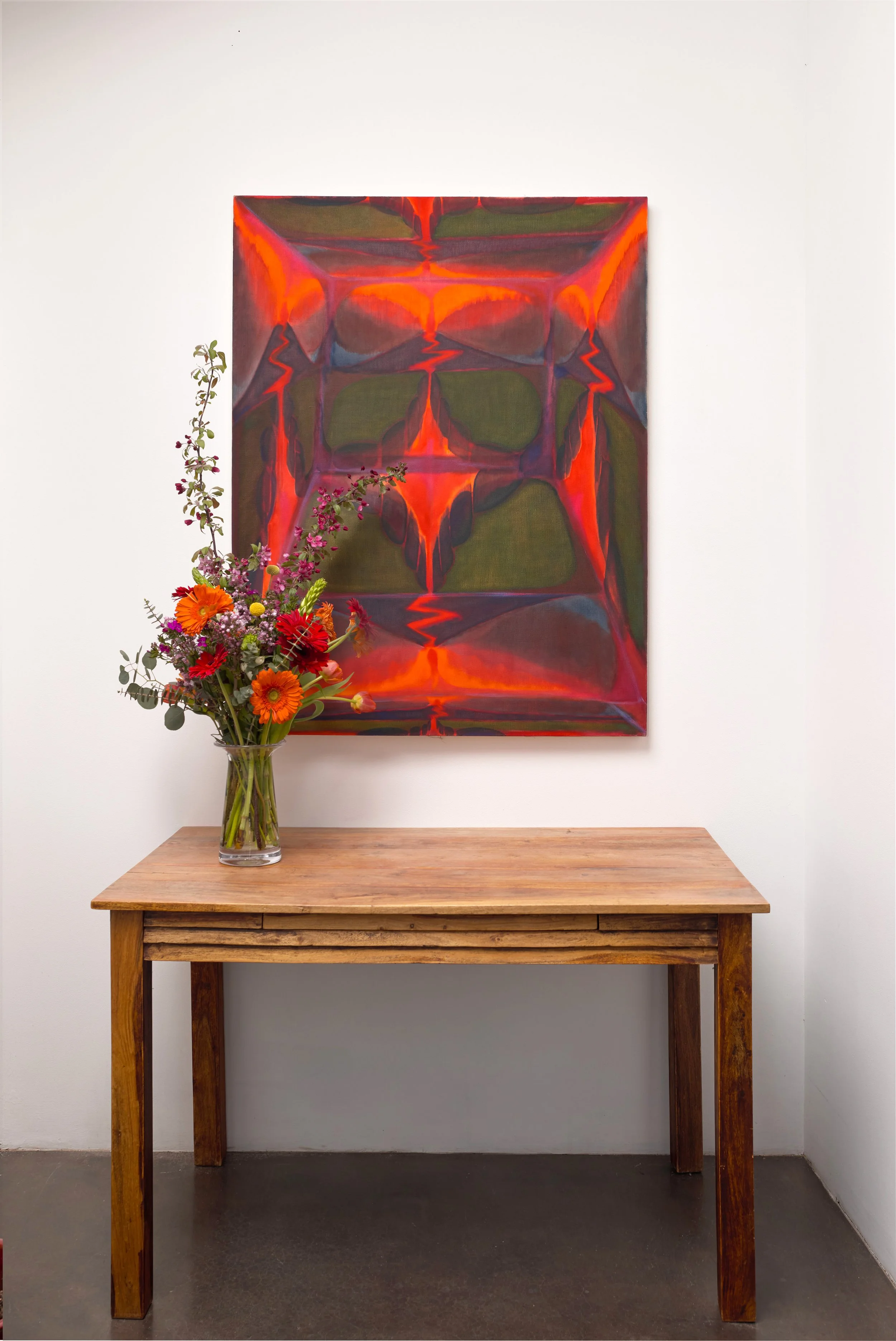
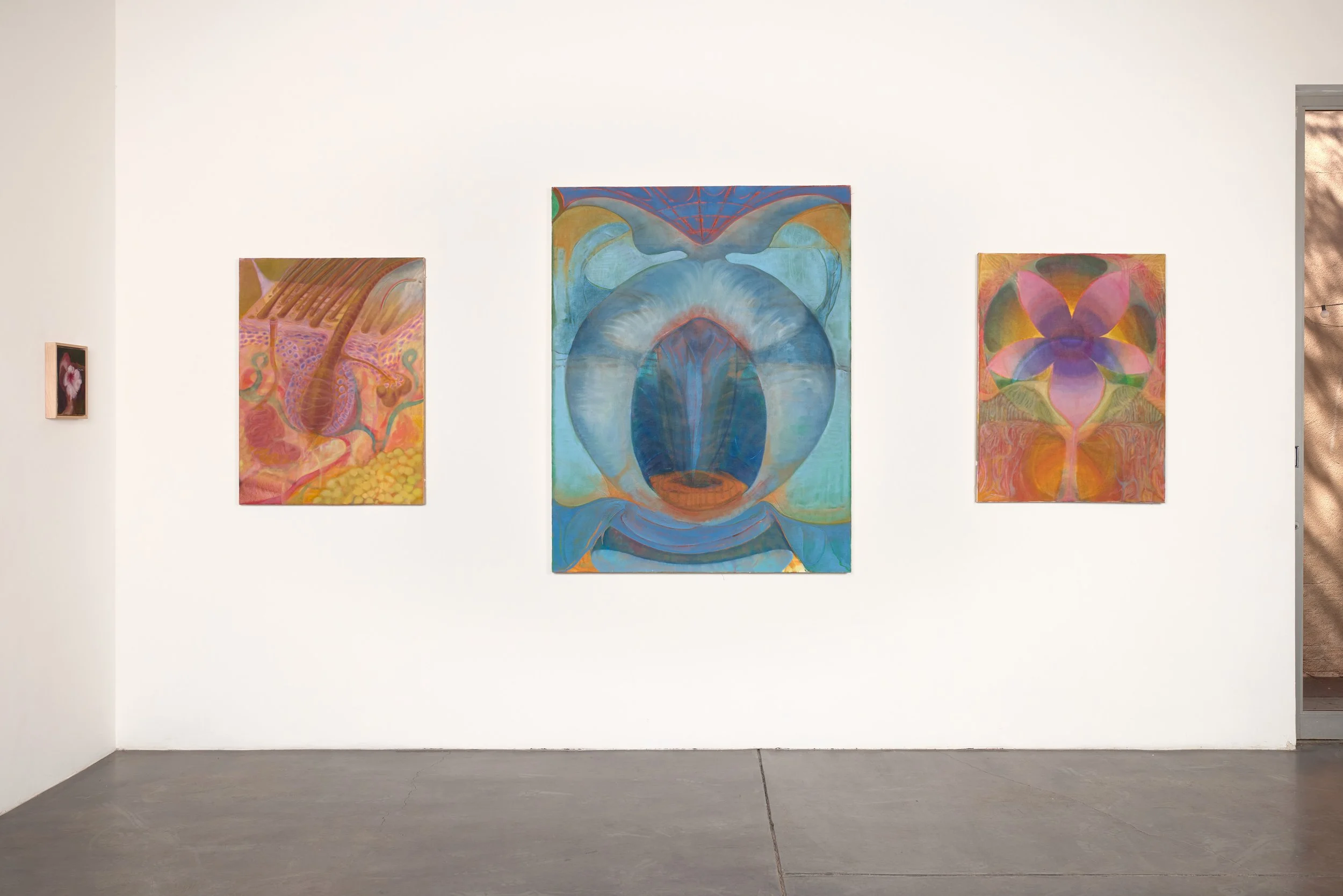
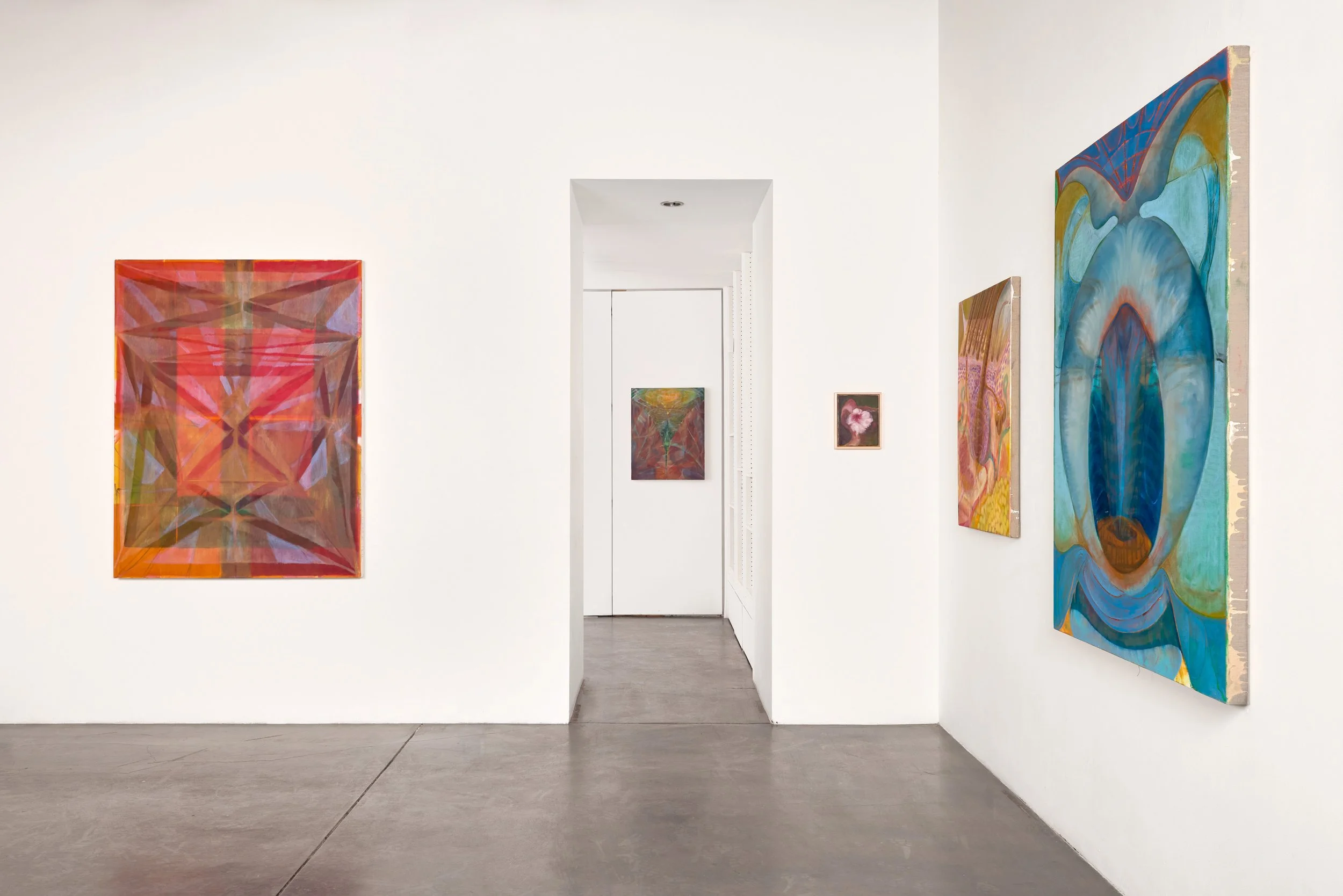
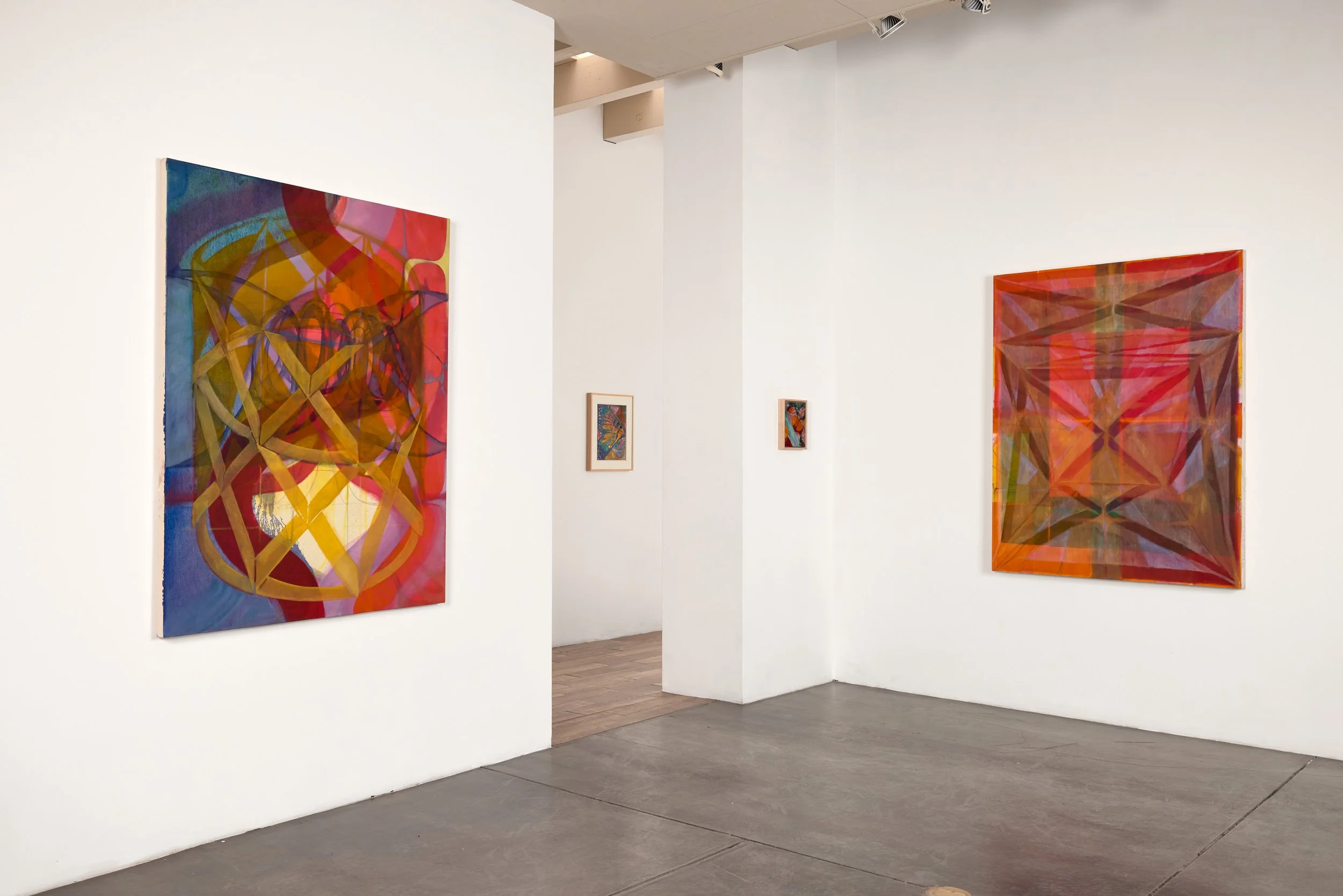
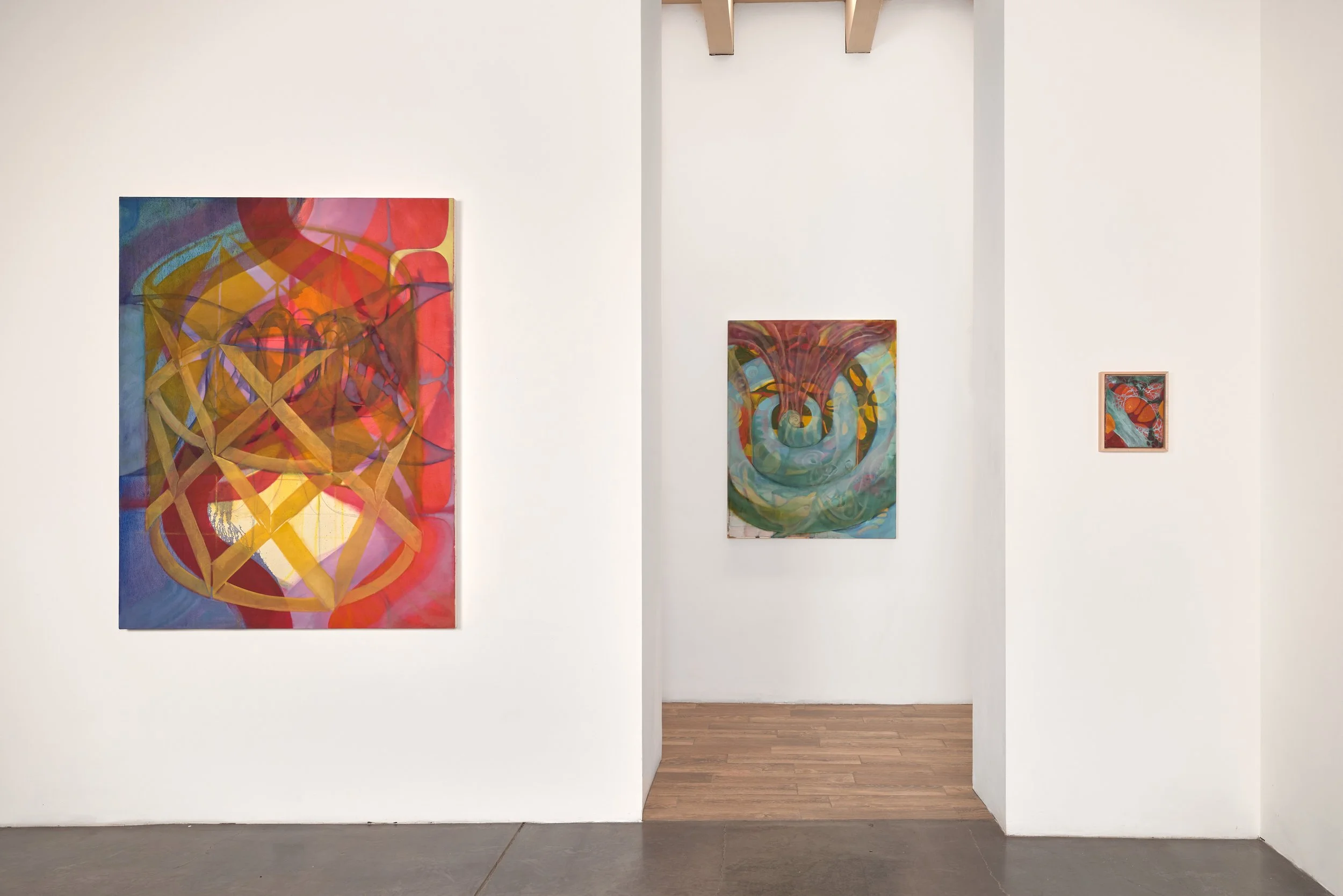
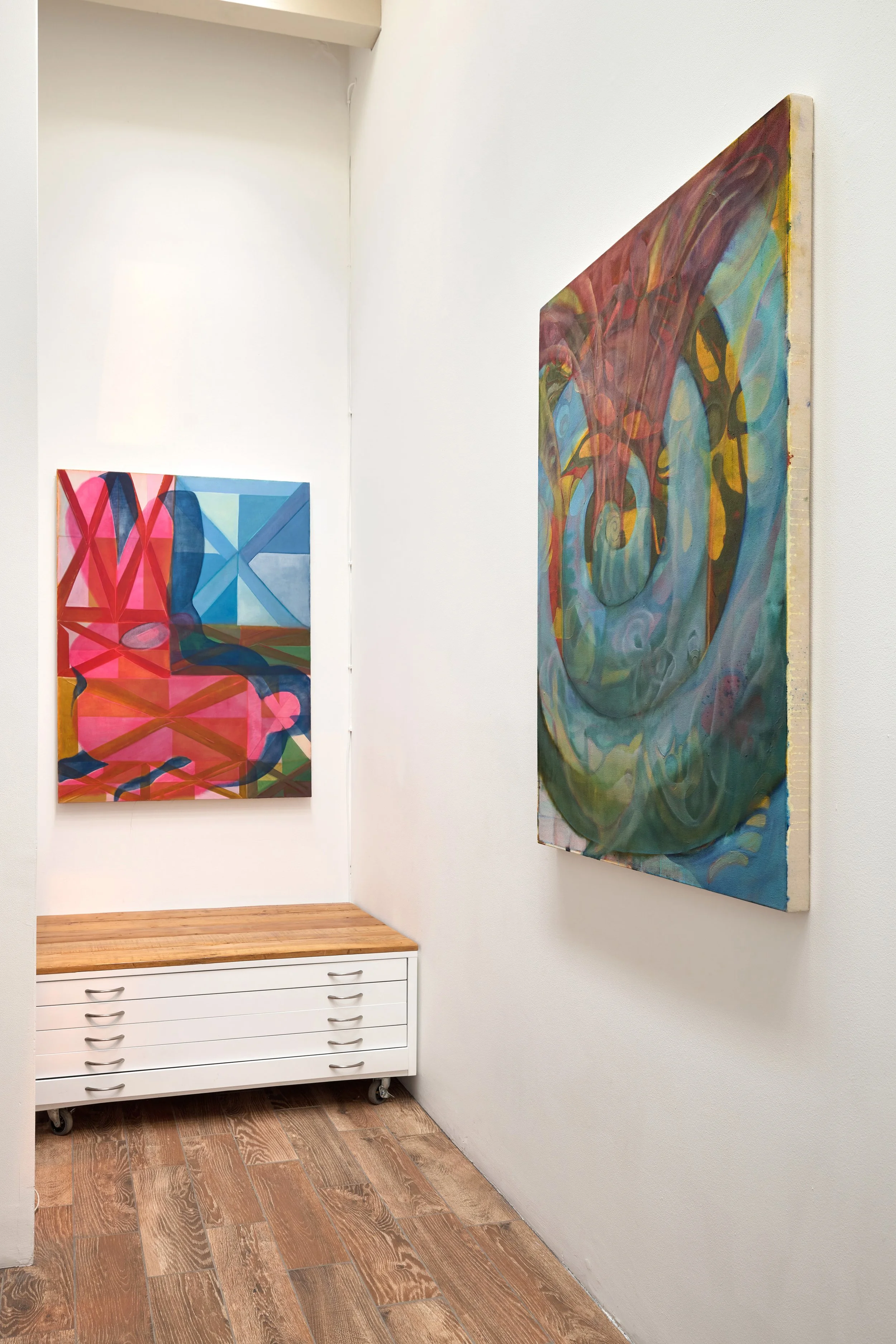
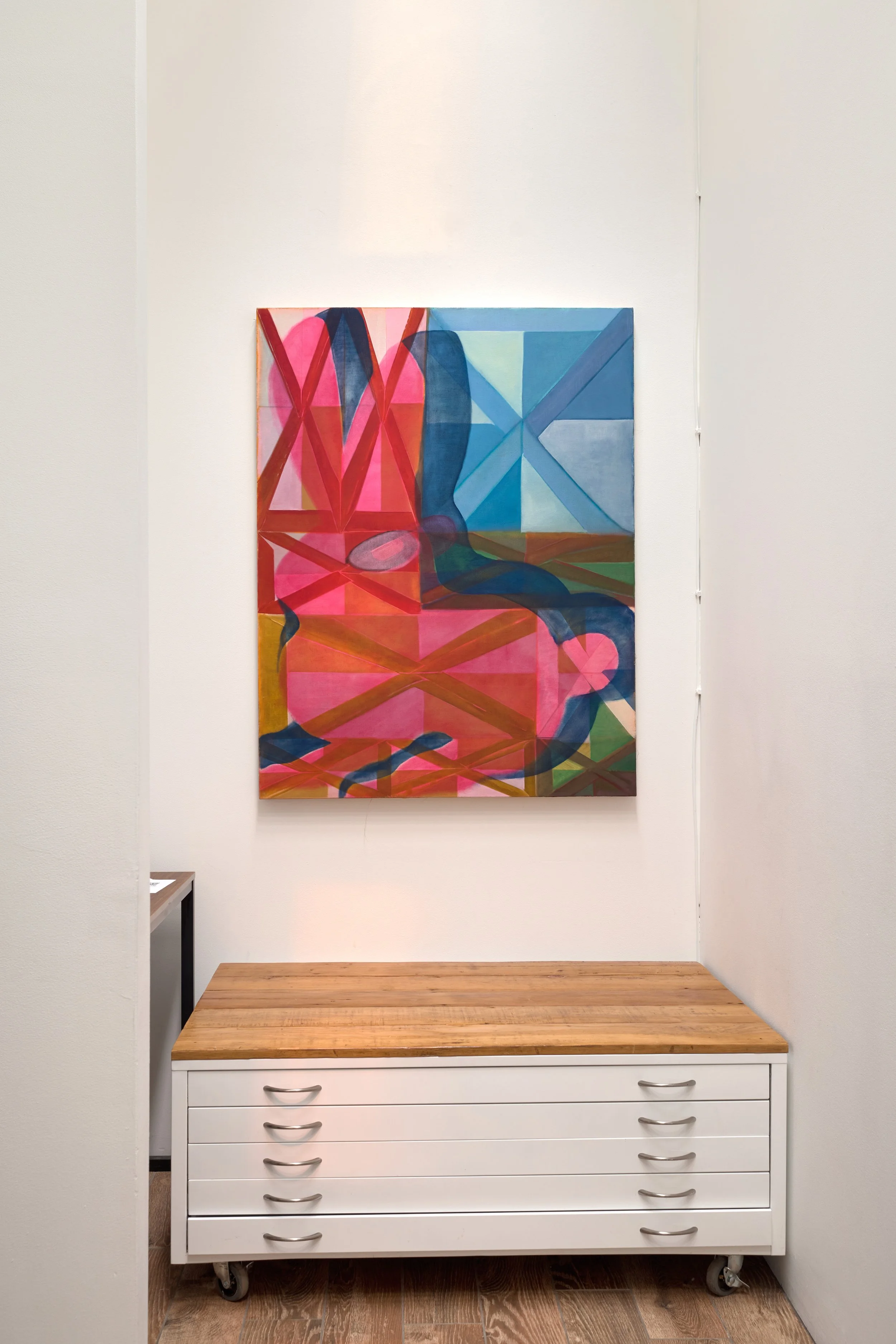
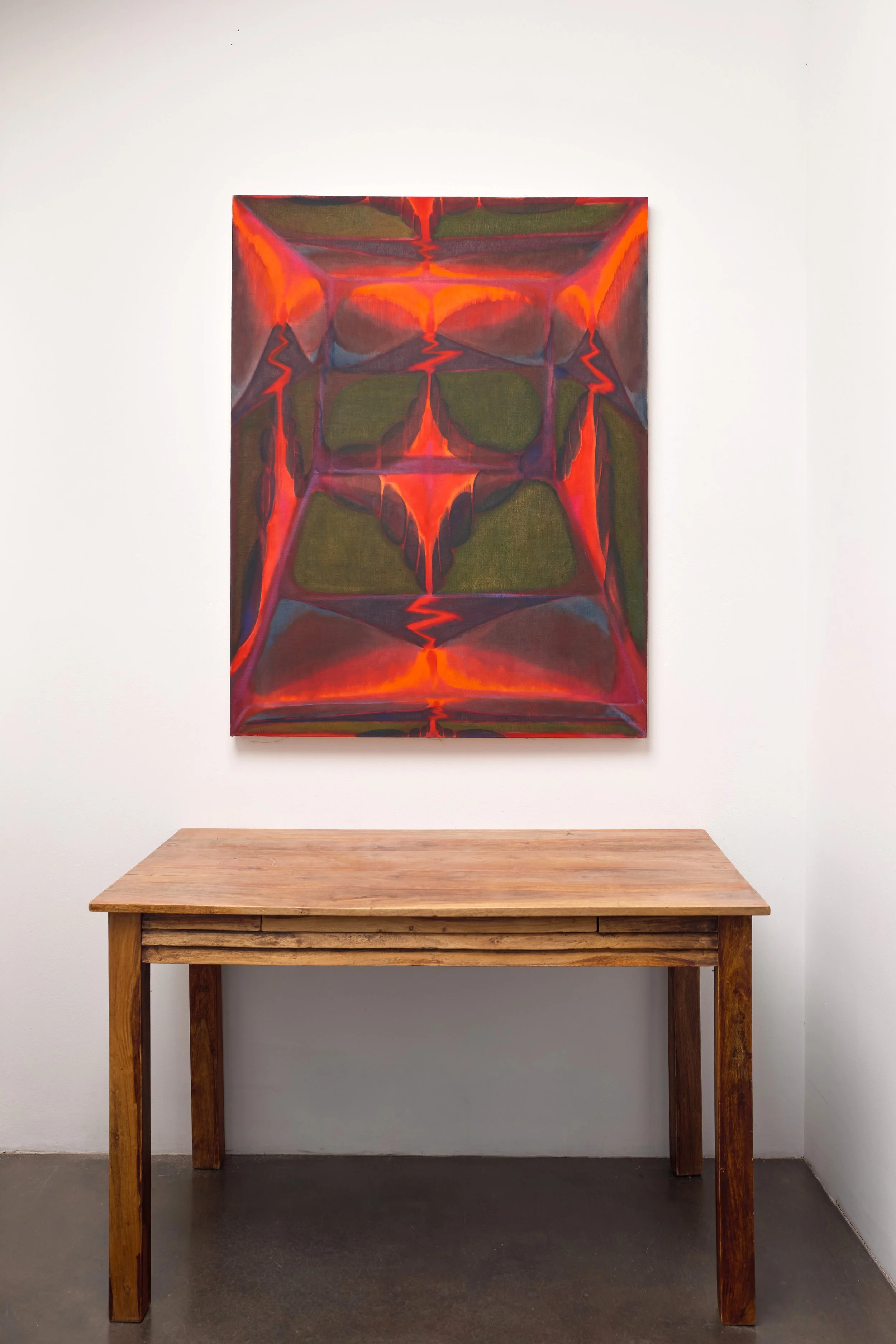
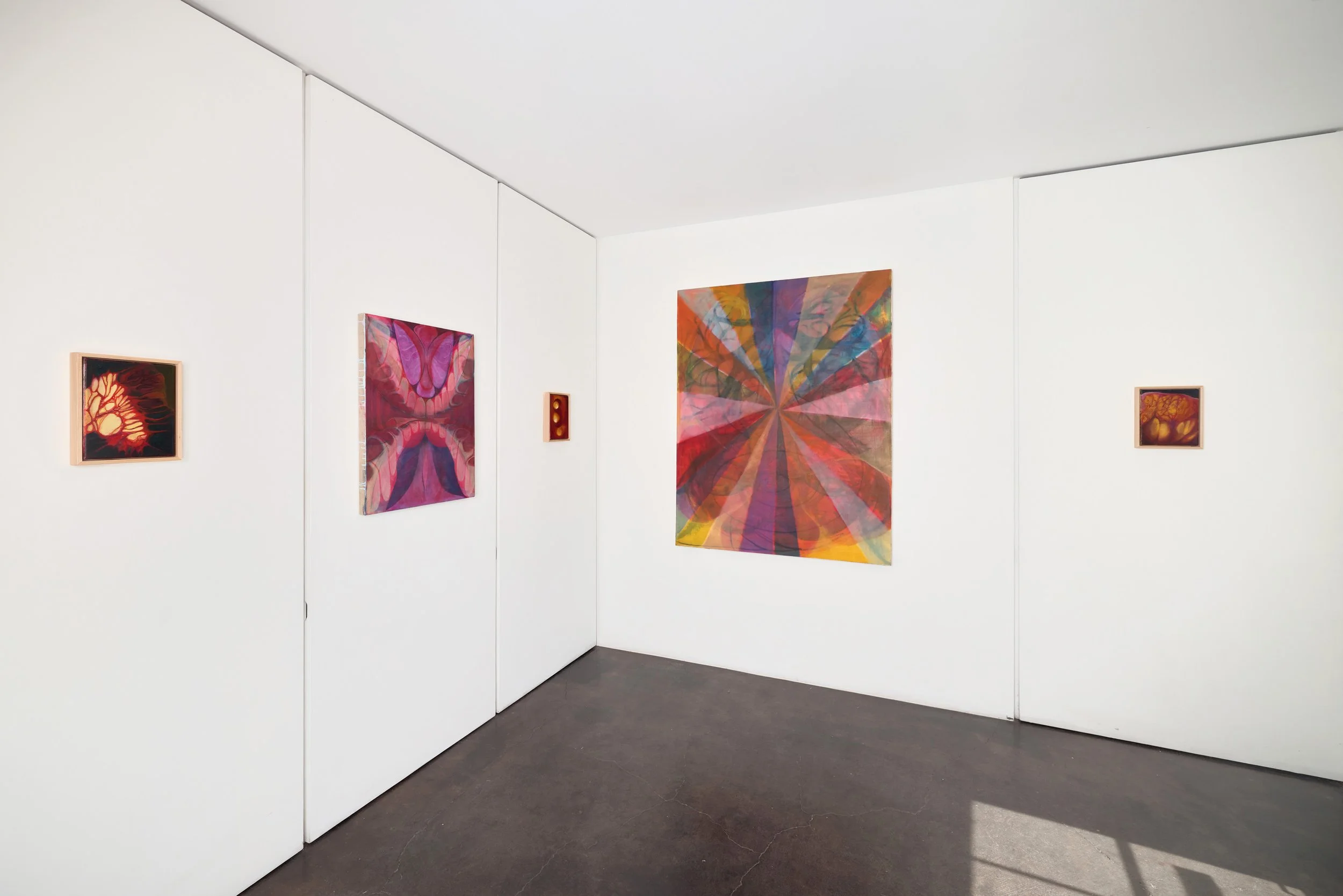
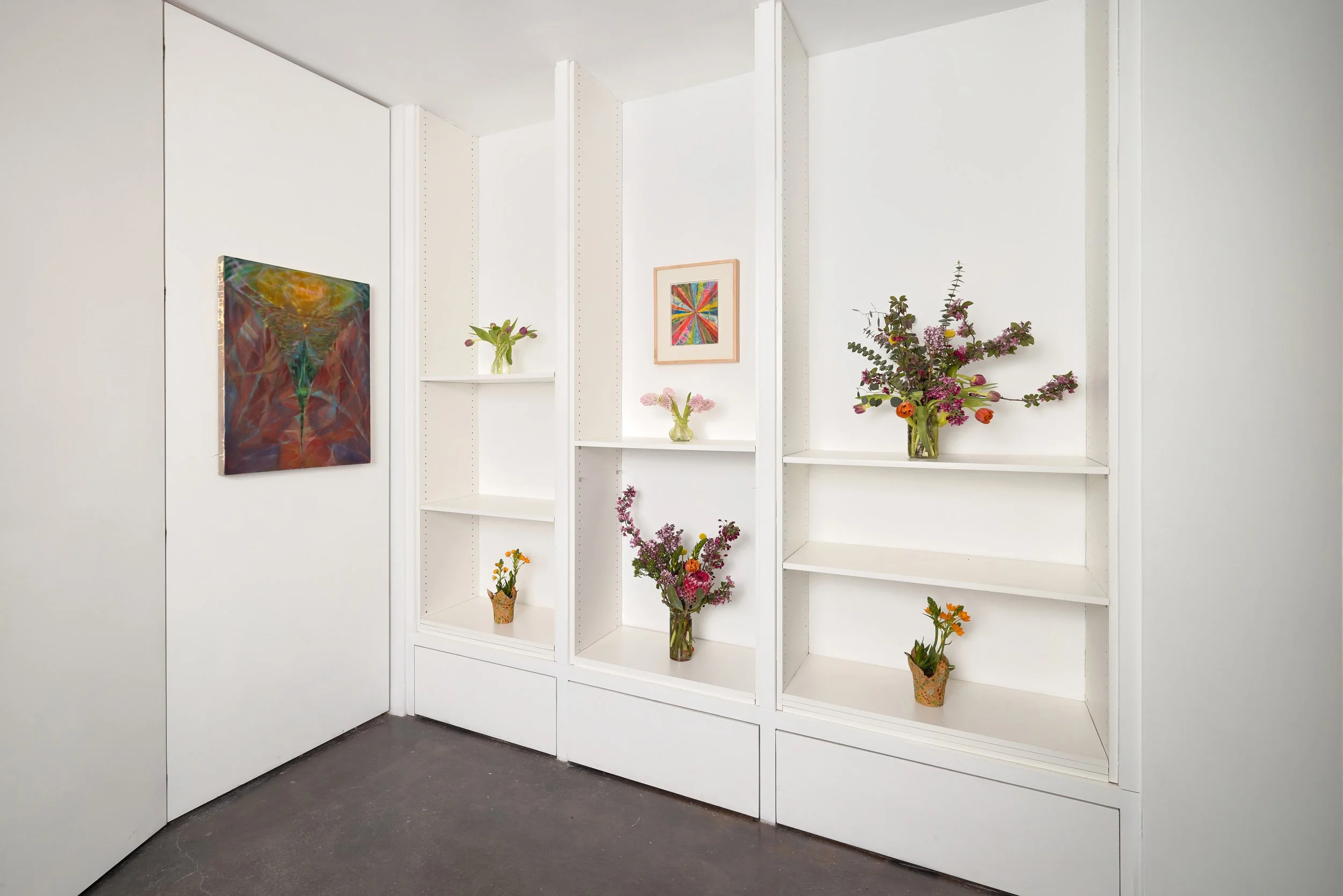
smoke the moon presents Centrifuge, a solo exhibition of new paintings by Lana Scholtz. The Albuquerque, NM based artist will exhibit a suite of large scale, saturated oil paintings on linen throughout smoke the moon’s main gallery space. Scholtz received an MFA in Painting from UNM in 2025. This is the artist’s debut solo show in Santa Fe. The works in Centrifuge are filled with layered vision, the prismatic force of the universe on full display.
A gravitational language with mysterious laws emerges in Scholtz’s paintings. Her scenes depict the helixed relationship between internal and external worlds. Objects yield toward an unknown center, compelled by great forces. The center never holds, and a kaleidoscopic system transforms recognizable structures into otherworldly terrains. The material research for Centrifuge traversed physics, anatomy and the earth sciences. Scholtz’s paintings play within the phantasmic outer limits of the scientific world.
There is something larval, vertebral and cosmic about the paintings on view in Centrifuge. They are bodily but not distinctly human. They oscillate between planetary and microscopic, as if each view will shed new light on the same equation. Scholtz’s work is like Reich’s cloudbuster turned technicolor; her paintings could be biological studies for the machines of a far away future or distant past. Each painting is both its own mystic universe and a page out of a transcendental fairytale. In Stone Milk, a milky, incandescent orb spins out of a winged form backgrounded in washy rose pinks and evening sky blues. The flittering outlines of a worm-like creature emerge and recede across the canvas. Interiority Complex ventures further into abstraction: hard lines weave and tessellate in sharp, molten cadmium reds and oranges punctuated by deep jewel tones. The pale moon and the grid on fire; both carry a distinctive glow.
Scholtz has honed a patience and control in her work that translates to an ecstatic final form. Her work is methodical and trusting in composition: layers and layers of hazy underpaintings are built up until the sensory logic of a painting presents itself to Scholtz. This is a practice that requires great fidelity to the language of paint and its embodied and instinctual articulation. What emerges is material documentation of vast research married with emotional and sensory experiences.
Each painting in Centrifuge mediates the space between transparency and opacity. Scholtz has found a way to paint the circle through a hole in its center; a place where new light shines through and patterns fray their outer limits. Scholtz’s paintings are both centered and wild: they plumb earthly logic with an open hand.